
Why the Motor Matters in a Crane
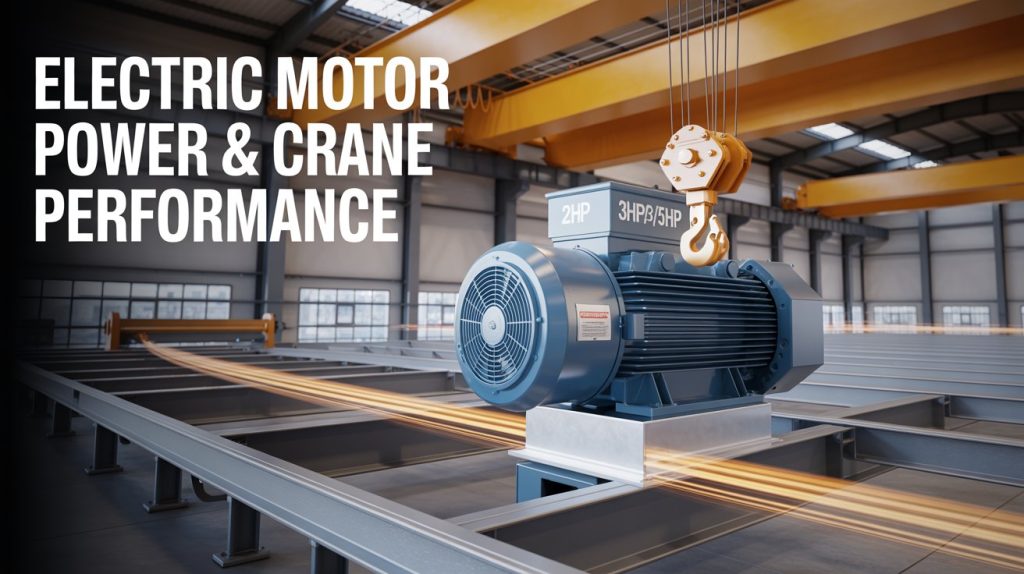
When it comes to any Construction Mini Crane or Material Hoist, the true powerhouse behind it is the Electric Motor (2HP/3HP/5HP).
It’s the component that drives the crane’s performance — determining how fast, how efficiently, and how safely it can lift heavy loads.
A poor motor selection can lead to overheating, slower lifting speeds, and even mechanical failure.
That’s why understanding the difference between 2HP, 3HP, and 5HP motors is essential for ensuring the best crane performance at your construction site.
Electric Motor (2HP/3HP/5HP): Which One Is Right for You?
| Motor Capacity | Ideal Use | Advantages | Limitations |
| 2HP | Light-duty work (200–500 kg loads) | Energy-efficient, compact, affordable | Limited torque for heavy materials |
| 3HP | Medium-duty work (500–1000 kg) | Balanced power & efficiency | Slightly higher electricity use |
| 5HP | Heavy-duty work (1000 kg and above) | Strong torque, continuous performance | Higher cost and energy use |
Your choice of Electric Motor (2HP/3HP/5HP) depends on your project size, load type, and available power source (single-phase or three-phase).
Key Factors Affecting Crane Performance
1.Load Capacity & Torque
Higher HP motors provide stronger torque.
For example, a 5HP motor can easily lift cement bags, steel rods, and concrete blocks without strain — whereas a 2HP motor may struggle under heavy loads.
2.Speed & Efficiency
Crane speed depends on both the motor RPM and gear system.
When combined with Gear MM Technology, a 3HP or 5HP Electric Motor delivers smoother, faster, and safer lifting — boosting productivity on-site.
3.Overheating & Duty Cycle
A 2HP motor can overheat under continuous operation, while 5HP motors are designed for longer duty cycles with better cooling efficiency, ensuring reliability during extended shifts.
4.Power Supply Compatibility
If your site runs on Single-Phase Power, go for a 2HP or 3HP Electric Motor.
For Three-Phase Power, a 5HP motor provides greater voltage stability and higher lifting consistency.
Real-World Example
Let’s compare two cranes:
- Crane A: Equipped with a 2HP motor
- Crane B: Equipped with a 5HP motor
Crane A works well for light construction or finishing jobs.
But as soon as the load crosses 700–800 kg, its speed drops and the motor heats up.
Crane B, on the other hand, handles the same weight effortlessly — faster, smoother, and more stable.
That’s the real impact of choosing the right Electric Motor (2HP/3HP/5HP) on overall crane performance.
Maintenance & Best Practices
- Choose slightly higher HP than your average load requirement.
- Check motor quality – insulation, wiring, and build.
- Ensure proper cooling and servicing – prevent overheating.
- Use within duty cycle – give breaks during long operations.
- Monitor voltage supply – avoid fluctuations to protect motor life.
Benefits of Choosing the Right Electric Motor
- Faster lifting speed and efficiency
- Lower electricity consumption
- Reduced maintenance cost
- Longer crane lifespan
- Enhanced safety and load stability
- Choosing the right Electric Motor (2HP/3HP/5HP) means your crane will perform consistently and safely — even in demanding site conditions.
Conclusion: The Right Motor = Reliable Performance
The Electric Motor (2HP/3HP/5HP) is not just a specification — it’s the heart of your crane.
Selecting the correct HP and motor type dramatically improves your crane’s performance, speed, and safety.
Whether you’re handling small residential projects or large commercial builds, matching your motor to your load is key to efficiency and long-term value.
Want Expert Guidance?
At Mathura Crane Industries, we manufacture reliable Mini Cranes, Monkey Cranes, and Material Lifting Solutions with powerful Electric Motors (2HP/3HP/5HP) designed for Indian site conditions.
Call Now: +91 9421872275
Visit: www.mathuracranes.com