
Introduction
On a construction site, time is lost not only in major delays but in small daily movements. Carrying materials floor by floor, waiting for labour availability, or shifting aggregates manually may look manageable, but over weeks, these activities increase cost and slow progress.
From our experience working with contractors, builders, and site engineers, one thing is clear. Projects that invest in the right material handling tools run smoother, safer, and more predictably.
This article explains how commonly used material handling equipment from Mathura Crane Industries improves site efficiency and helps control construction costs in real working conditions.
Why Material Handling Tools Matters More Than Most Contractors Realise
Material handling is not just about lifting weight. It directly affects:
- Labour productivity
- Daily work speed
- Worker fatigue and injuries
- Material wastage
- Overall project timelines
When materials move efficiently, skilled labour spends more time on actual construction work instead of carrying, shifting, or waiting.
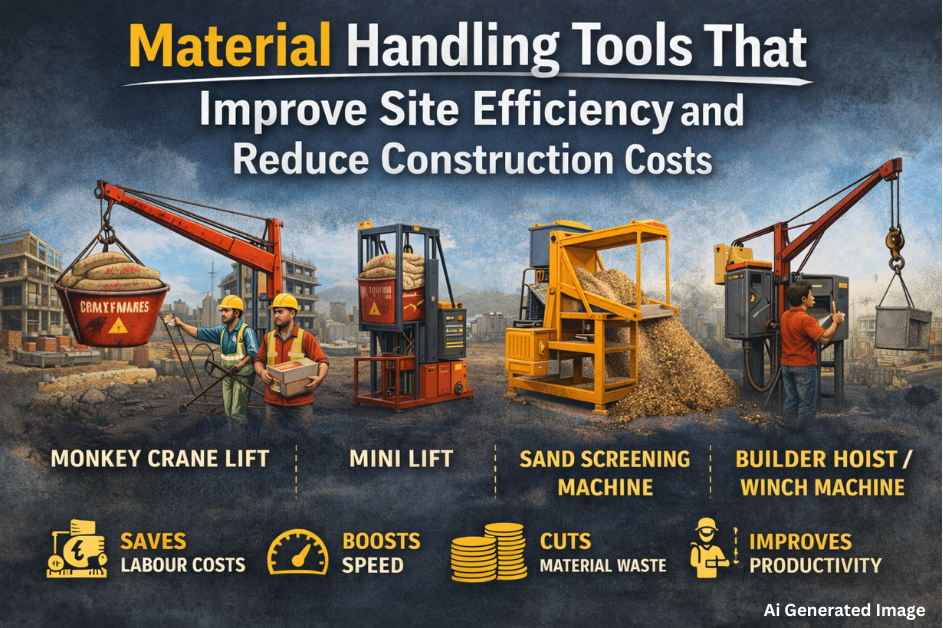
Monkey Crane Lift – Backbone of Vertical Material Movement
How It Improves Site Efficiency
Monkey crane lifts are widely used for vertical movement of sand, cement, bricks, tiles, and tools. On multi-floor construction, this tool becomes central to daily operations.
Instead of multiple workers carrying loads through stairs or scaffolding, materials reach upper floors directly and consistently.
This leads to:
- Faster material supply to working floors
- Reduced dependency on manual labour
- Continuous workflow without interruptions
How It Saves Cost
From a cost point of view, monkey cranes reduce recurring labour expenses. One machine replaces several labourers involved in lifting tasks. Over time, the investment pays for itself, especially when the crane is reused across multiple projects.
Mini Lift – Controlled Lifting for Compact Sites
Where Mini Lifts Are Useful
Mini lifts are preferred where space is limited or where controlled lifting is required. They are commonly used for lifting cement bags, tools, and finishing materials in residential and small commercial projects.
Their compact design allows them to operate efficiently in narrow or congested sites.
Efficiency and Cost Benefits
Mini lifts reduce material handling time during finishing stages, where frequent small lifts are required. This avoids delays caused by waiting for shared equipment or labour.
From a cost perspective:
- Power consumption remains low
- Maintenance is simple
- Output remains consistent
Sand Screening Machine – Faster, Cleaner Material Processing
Why Sand Screening Impacts Site Efficiency
Manual sand screening is slow and labour-intensive. It also leads to inconsistent quality, affecting plastering and finishing work.
A sand screening machine ensures uniform material quality while processing larger quantities in less time.
This helps contractors maintain:
- Consistent work quality
- Faster preparation cycles
- Better coordination between material supply and application
Cost Saving Through Reduced Wastage
Screened sand improves cement consumption control and reduces rework. Labour dependency reduces, and material usage becomes more predictable.
Over time, this directly affects project cost control.
Winch Systems – Simple Solutions for Repetitive Lifting
Daily Site Use
Winches are commonly used for controlled lifting in repetitive tasks. Their simple mechanism makes them reliable for routine operations where precision and consistency are required.
Cost and Maintenance Advantage
Winches have low operating costs and long service life when used within limits. They are easy to maintain and suitable for continuous site usage.
Combined Impact on Site Productivity
When these tools are used together, their impact multiplies. Materials move faster, labour is used more efficiently, and work schedules become easier to manage.
From a manufacturer’s perspective, the most successful sites are not the ones with the most machines, but the ones using the right machines correctly.
Frequently Asked Questions
Why are Material Handling Tools important on construction sites?
They reduce manual effort, improve speed, and help maintain consistent workflow, which directly impacts project timelines and costs.
Which Material Handling Tools gives the fastest return on investment?
Monkey crane lifts usually deliver the quickest ROI due to their frequent daily use and labour cost reduction.
Do these tools reduce labour requirement completely?
No. They reduce manual lifting, allowing labour to focus on skilled construction tasks instead.
Are these Material Handling Tools suitable for small sites?
Yes. Equipment like mini lifts and monkey cranes are designed for compact and medium-sized sites.
Can the same equipment be reused on multiple projects?
Yes. Most contractors move these tools from one site to another, improving long-term value.
Conclusion
Material handling tools play a quiet but critical role in construction efficiency. When chosen correctly, they reduce daily effort, control costs, and keep projects moving without unnecessary delays.
From our experience, contractors who invest in the right lifting and handling equipment see better productivity and smoother site coordination.
At Mathura Crane Industries, we focus on providing Material Handling Tools solutions that work reliably under real Indian site conditions, helping contractors build faster, safer, and more efficiently.